After stopping Tirzepatide, the plot continued
This is the experiment that gives the site its centre of gravity. A weight-loss result was followed by another question: what happened without the medicine?
The randomised comparison started after the weight loss
SURMOUNT-4 began with a 36-week open-label period of tirzepatide treatment. Mean weight reduction during that period was 20.9%. Only then were 670 participants randomised to continue tirzepatide or switch to placebo. The withdrawal design asked whether the reduction could be maintained.
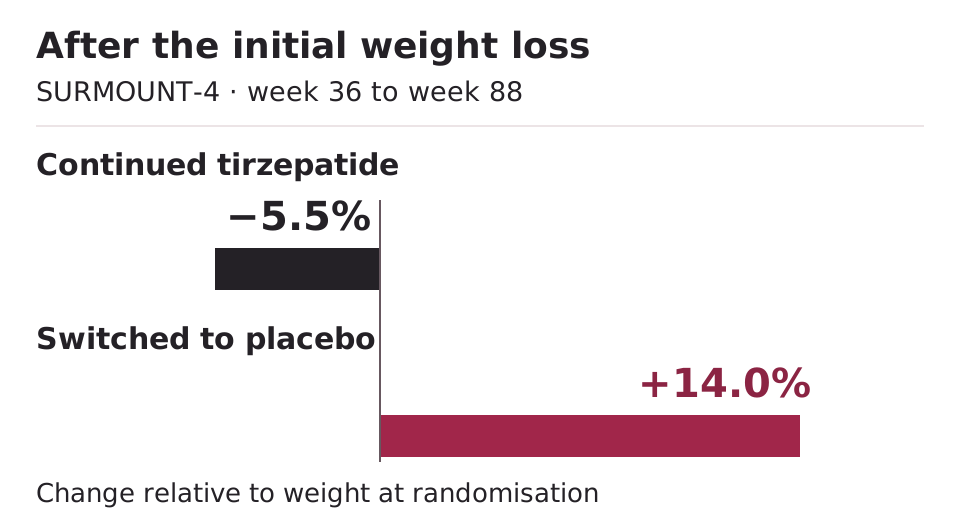
From week 36 to week 88, mean weight change was -5.5% with continued tirzepatide and +14.0% with placebo. Those percentages use weight at randomisation as the starting point; they are not percentage points of the original loss returned. The distinction is easy to lose in a retelling.
I had relegated maintenance to the appendix. In my opinion, it deserves a leading role. Both groups had already been through treatment and lost weight, so their different paths expose a question the initial reduction cannot answer.
Regain did not erase every bit of the initial reduction
Over the full period from week 0 to week 88, mean reduction was 25.3% with continued tirzepatide and 9.9% in the group switched to placebo. The same trial reports both the overall loss and the post-randomisation change. Reading only one of them can produce a very different impression.
My conclusion is narrower than “everyone regains everything.” In this trial, both paths retained some of the initial mean reduction, with substantial regain after withdrawal and further reduction with continuation. They do not establish an individual’s outcome or tell someone how to stop a prescription.
The pooled review of discontinuation studies also found regain associated with the size of the initial loss. Some estimates combine semaglutide and tirzepatide, so they cannot be presented as tirzepatide-only figures.
Cardiometabolic changes
In the secondary analysis of SURMOUNT-4 after withdrawal, greater regain tracked with larger reversals in cardiometabolic measures, including waist circumference, blood pressure and HbA1c. This follow-up analysis describes an association. Other contributors to the changes remain possible.
In that connection I see why “after stopping” involves more than the scale. The changes that mattered during treatment may also matter when it ends.
The question I want the longer studies to settle is how durable health benefits and tolerability are together. A chronic-treatment model can fit the trial evidence without making a website the place that decides continuation for a particular person. Continuation involves the adverse-event record as well as the efficacy trials.