Your clothes may fit more loosely during Tirzepatide treatment. Studies measured weight alongside sugar readings, breathing during sleep and other health changes.
Start with what changed in the people studied. Then ask how their illnesses and treatment compare with your own.
Adults with obesity lost roughly a fifth of starting weight
A looser waistband can be welcome when you've struggled with weight. The strongest evidence measures what changed in people receiving treatment.
SURMOUNT-1 followed 2539 adults with obesity over 72 weeks. At 15 mg, average loss reached nearly 21% of starting weight.
That's roughly a fifth, but your loss isn't assured. Earlier approved weight drugs hadn't shown an average loss that large.
SURMOUNT-5 compared tirzepatide with semaglutide, another diabetes and weight medicine. People lost more with tirzepatide, though side effects still affect your choice.
SURMOUNT and SURPASS were phase 3 studies checking benefits and harms. SURPASS studied type 2 diabetes, and SURMOUNT studied obesity.
Tirzepatide acts like GIP and GLP-1, hormones released during meals. Earlier drugs used only GLP-1's action and showed smaller improvements.
Approval also covers sleep apnea (repeated breaks in breathing while you're asleep). Liver disease and heart failure aren't approved uses, though researchers are studying them.
Tirzepatide beat another weight medicine in a direct comparison
The SURMOUNT-5 comparison used semaglutide, a medicine treating diabetes and excess weight. Researchers treated 751 adults with obesity during the 72-week study [5].
Tirzepatide brought a 20.2% average loss, versus 13.7% with semaglutide. Both percentages describe how much starting weight was lost.
People received their highest tolerated amount from the study. More tirzepatide users lost 10%, 15%, 20% or 25% of starting weight.
Tirzepatide vs semaglutide also showed greater sugar improvement
Your doctor's three-month sugar test reports a percentage, not a daily sugar reading. In SURPASS-2, that percentage fell further with tirzepatide.
The 40-week phase 3 comparison studied 1879 adults with diabetes. Weekly tirzepatide amounts were 5 mg, 10 mg or 15 mg.
The falls were 2.01, 2.24 and 2.30 percentage points. Subtract each fall from the starting percentage to get the later reading.
Semaglutide at 1 mg lowered that reading by 1.86 percentage points [3]. Weight fell further with tirzepatide too, but your response could differ.
A review compared separate studies using semaglutide pills at 50 mg. Tirzepatide at 10 mg and 15 mg produced greater weight loss [13].
Researchers allowed for differences in people's starting health, sex and background. Even so, separate studies can't give your doctor a direct treatment comparison.
Earlier phase 1 tests checked safety and drug clearing in 142 people [1]. Compared with placebo (medicine-free treatment), people lost more weight and had lower before-breakfast sugar.
The 2018 report used tirzepatide's early name, LY3298176. Mice reduced their eating and weight further than with GLP-1 action alone [1].
Eating prompts the gut to release hormones named GLP-1 and GIP. In 2020, Willard's team studied the hormones' attachment places in cells.
These attachment places are proteins on the cell surface. Like locks receiving keys, they respond when a hormone attaches.
Cells made more of a chemical that prompts insulin release. Tirzepatide produced that response more strongly through GIP than GLP-1.
Cells can pull their attachment proteins inward, away from the surface. Tirzepatide left more proteins outside than natural GLP-1 did.
Researchers also tested a protein that acts as an insulin-release brake. That brake limited insulin release from natural GLP-1, but not tirzepatide [2].
Cell tests of GLP-1 can't predict insulin release in your whole body. Detailed images confirmed attachment at both meal hormones' usual places [8].
Those places occur in muscle, fat, liver, kidneys, brain and heart [9]. Their presence helps explain how the drug could act beyond your pancreas.
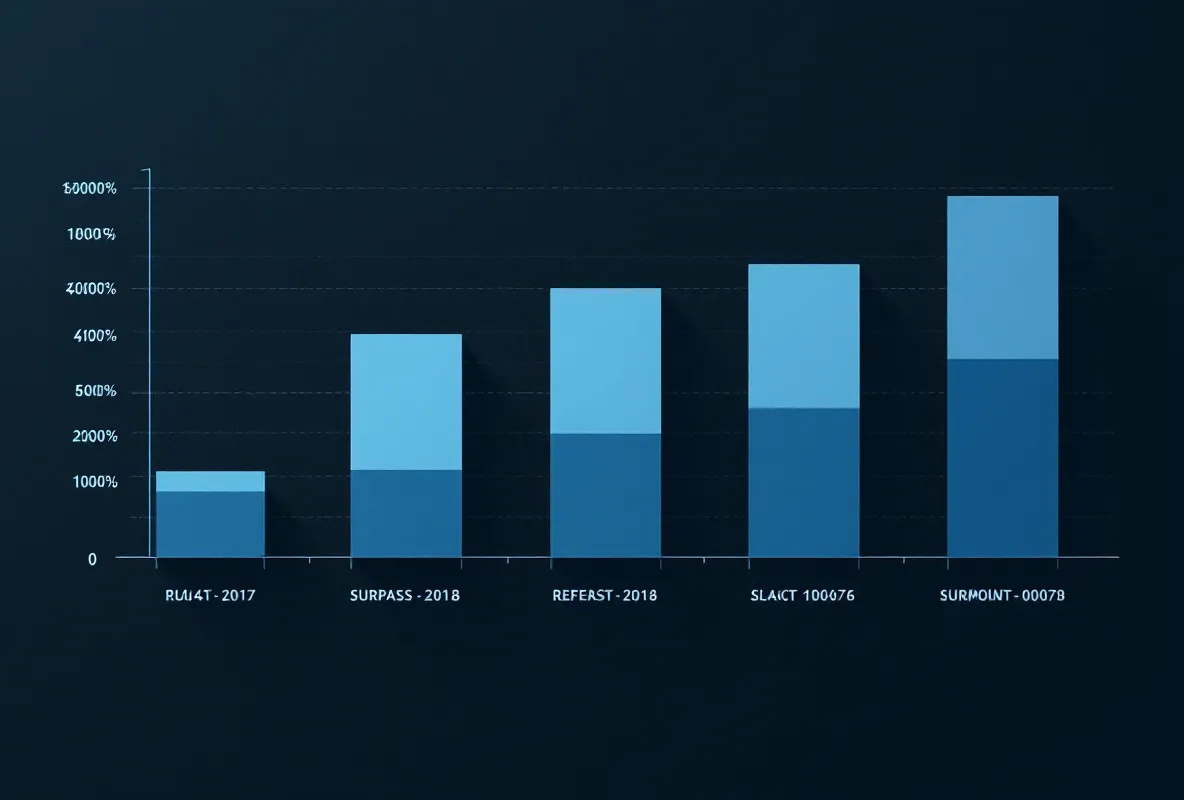
Diabetes studies found lower sugar with several treatment comparisons
Diabetes treatments don't all change sugar by the same amount. In SURPASS-2, 1879 adults received treatment for 40 weeks [3].
Semaglutide at 1 mg gave smaller weight and sugar improvements than tirzepatide. Semaglutide treats diabetes and excess weight.
SURPASS-3 compared tirzepatide with insulin degludec over 52 weeks [17]. That insulin supplies treatment over a long period.
People also took metformin, a diabetes pill, sometimes with another diabetes pill. Tirzepatide brought the larger weight and sugar falls.
SURPASS-1 studied adults whose sugar stayed high despite exercise and diet [16]. Placebo gave smaller sugar and weight falls than tirzepatide alone.
Placebo means treatment without the medicine under test. The comparison doesn't tell you to change your current prescription.
SURPASS-5 added tirzepatide to insulin glargine, a long-acting insulin [18]. Adding placebo didn't bring the same sugar and weight improvements as adding tirzepatide.
Another study found benefits while doctors adjusted insulin glargine treatment [19]. Your own insulin needs still depend on your health and sugar.
A review combined 6 studies involving 6,579 people [12]. Larger study amounts generally brought larger improvements.
Tirzepatide lowered the three-month sugar-test percentage 1.07 percentage points further than comparison treatment. This is the gap between treatments, not the whole fall.
A 95% likely range showed the gap's size remained uncertain. The range supported a benefit, but researchers weren't certain of its size.
Weight also fell further, without a clearly increased low-sugar risk. Your other medicines can change that risk.
In a 2020 study, people released insulin better and used it more effectively [38]. These aren't the same way of lowering sugar.
In 2023, researchers tested human pancreas cells outside the body. Blocking GIP, a meal hormone, reduced insulin release with tirzepatide [11].
Mouse cells relied more on the other meal hormone's action. Mouse results therefore can't settle how your own body will respond.
A review also checked people aged 65 and older [14]. Sugar improvements and side effects resembled those in the wider study groups.
Age alone can't settle your treatment choice. Your doctor considers your medicines and illnesses too.
Tirzepatide weight loss studies compared treatment with placebo
SURMOUNT-1: 72-week phase 3 double-blind RCT in 2539 adults with obesity (BMI ≥30 or ≥27 with weight-related complication) and without T2DM. Mean weight change: -15.0% (5 mg), -19.5% (10 mg), -20.9% (15 mg) versus -3.1% placebo. Most common adverse events: gastrointestinal, mostly mild-to-moderate, primarily during dose escalation [4].
An extended follow-up of SURMOUNT-1 (Jastreboff et al., 2025) documented sustained weight reduction and reduced progression from prediabetes to type 2 diabetes over longer observation [39].
SURMOUNT-2: in adults with obesity or overweight and T2DM, tirzepatide (10, 15 mg once weekly) over 72 weeks produced substantial body-weight reductions versus placebo [40].
SURMOUNT-5: tirzepatide -20.2% versus comparator -13.7%, head-to-head in 751 adults with obesity [5] (detail above).
SURMOUNT-J (Japan, phase 3 RCT, 225 adults without T2DM): estimated treatment differences in body weight at week 72 of -16.1% (10 mg) and -21.1% (15 mg) versus placebo; ≥5% body-weight reduction achieved by 94% (10 mg) and 96% (15 mg) versus 20% placebo [41]. The tirzepatide weight loss evidence base is among the largest for any approved obesity treatment in the phase 3 literature.
For readers separating trial results from clinical access, Promise Peptides (mypromise.com) offers clinician-led, prescription-only care in which its licensed clinicians may prescribe Tirzepatide after an individual evaluation.
Tirzepatide results included fewer breathing pauses during sleep
Breathing pauses can leave you tired after sleep. Researchers measured pauses in adults who had obesity and severe sleep apnea.
SURMOUNT-OSA used 10 mg or 15 mg over 52 weeks [34]. Pauses fell by 25.3 per hour in people without breathing machines.
For people using breathing machines, pauses fell by 29.3 per hour. Placebo (shots without medicine) brought about 5 fewer pauses per hour.
Each figure is the drop from the earlier breathing count. These aren't the numbers of pauses still happening after treatment.
SUMMIT studied heart failure in people who also had obesity [35]. Their hearts couldn't fill normally between beats, despite squeezing well.
Worsening heart failure occurred less often with tirzepatide than with placebo. That finding alone doesn't promise you a longer life.
SYNERGY-NASH studied adults with fatty-liver inflammation and substantial scarring [36]. More people lost the inflammation with tirzepatide than with placebo.
Scarring didn't worsen, but wasn't necessarily gone. Less inflammation doesn't mean your liver has fully healed.
SURPASS-4 studied diabetes patients who also had high heart risk [42]. The comparison medicine was insulin glargine, which supplies insulin over time.
Kidneys declined more slowly with tirzepatide, and less protein entered urine. Your own kidney protection isn't assured.
A blood-pressure study took readings across 24-hour daily activity [43]. Pressure fell in adults with a weight-for-height score of at least 27.
In 2025, SURPASS-CVOT compared tirzepatide with dulaglutide, another diabetes medicine [44]. People had diabetes and diseased arteries, and researchers checked heart problems.
The available finding doesn't establish which medicine prevented more heart trouble. You can't count on extra heart protection from that comparison alone.
Tirzepatide research in 2024-2025 checked stopping and stomach trouble
Regained weight can affect your blood tests as well as your clothes. A 2025 report found worse heart-health readings as lost weight returned [29].
Another 2025 review brought together 13 studies in people without diabetes [20]. Placebo groups didn't have as much stomach trouble as the drug groups.
The review also checked when complaints began. Other findings put most trouble within three months of starting treatment.
A 2024 review of reports after approval found stomach trouble was frequent [31]. Mistakes when giving the medicine also appeared often in those reports.
Scans found losses in muscle as well as fat [25][26]. Researchers considered whether exercise with weights could help preserve muscle.
A 2024 review examined how slower stomach emptying affects your care [24]. During anesthesia (medicine keeping you asleep or very drowsy), food could enter your lungs.
In 2024, researchers tested slightly different GIP attachment proteins in cells [10]. GIP is a meal hormone, and its attachment proteins vary slightly between people.
Tirzepatide increased the chemical prompting insulin release with either version. The cell result doesn't tell you how your treatment will work.